
It’s not very often in life that you pull back the bedroom curtains to find iceberg’s staring back at you. Nonetheless, that’s exactly what happened to me recently when I was fortunate enough to be on a cruise that docked in a place called Qaqortoq in Greenland.

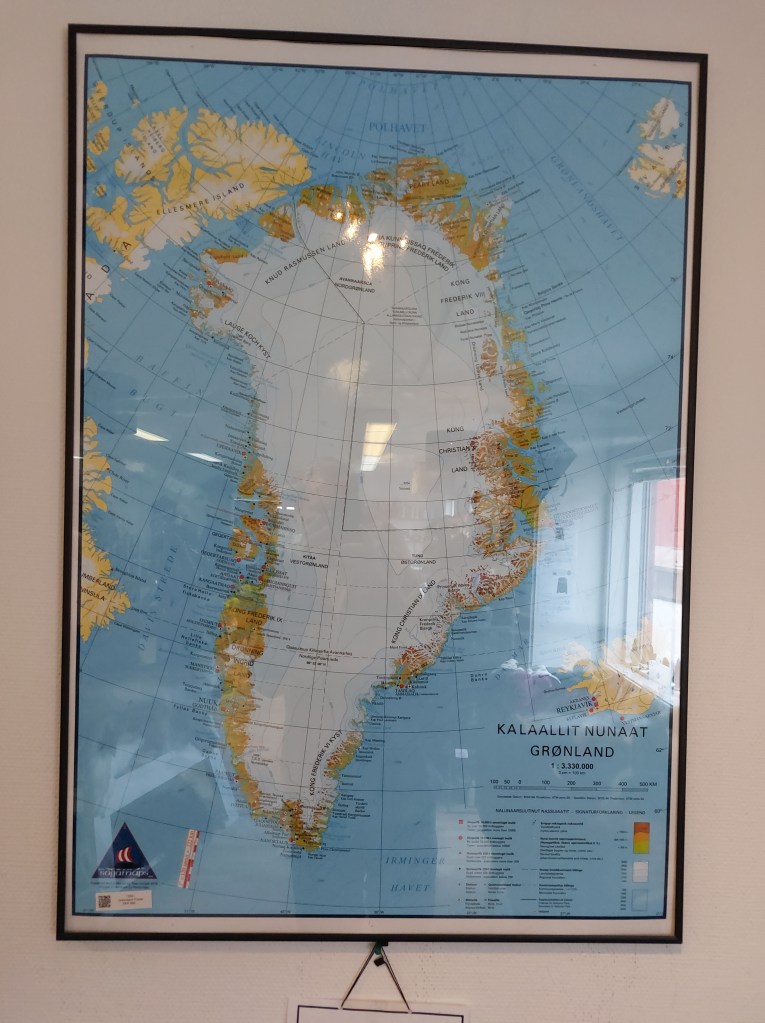
For anyone unfamiliar Greenland is larger in size than Western Europe but with a population of just 56,836 at the last count (2024). Officially it’s a territory of Denmark with, as the map below shows, only the coastal areas habitable. The road systems don’t link one place to another though they simply loop you round the place you’re in. Our ship wasn’t able to dock in Qaqortoq’s relatively small harbour but once a tender had taken us over it really is a very interesting place and well worth visiting.
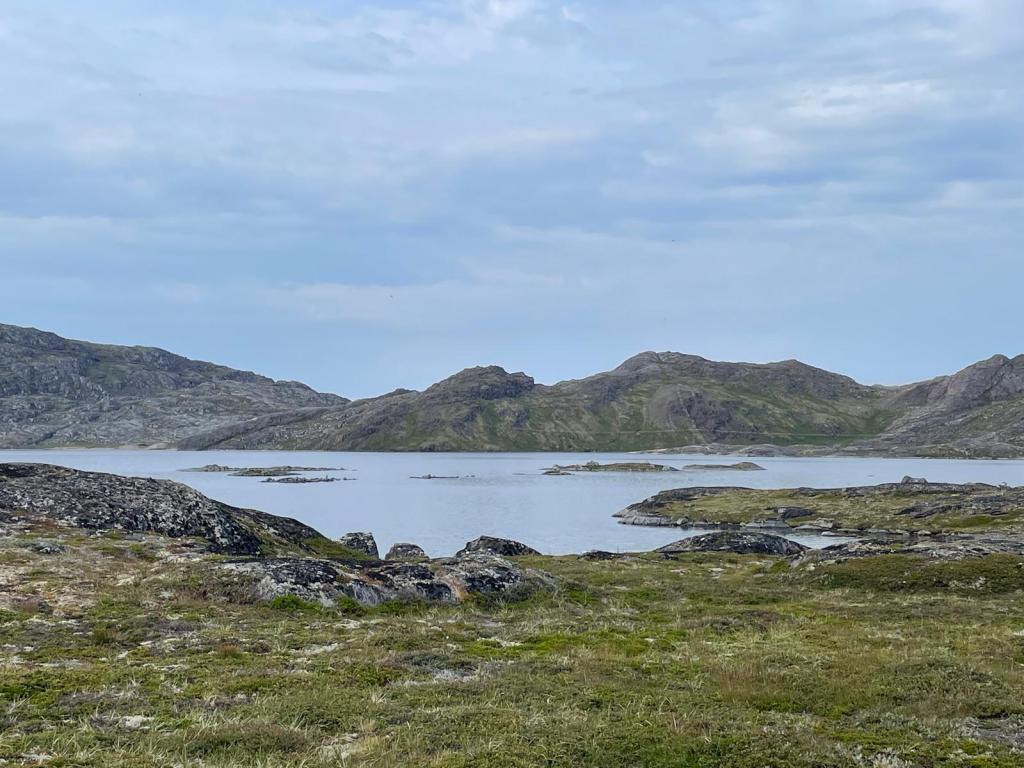
The first sight we headed for was Lake Tasersuaq. It is a short walk from the town centre via a housing estate and an all weather football pitch. Someone had kindly left a ball on the pitch and with no one actually playing or even nearby I couldn’t resist netting a goal on foreign soil.
The main thing that struck me in and around the lake, other than its obvious beauty, was the quietness. No distant hum of traffic or thousands of other walkers. There did seem to be a genuine Greenlandic couple there though who had been camping out overnight. They waved to us enthusiastically. However, be warned, Greenland does have mosquitoes and there were patches by the lake where they were numerous.
The population of Qaqortoq is around 3,000 and you may ask yourself how do you survive in such a remote place. The answers were provided following the walk back into the town centre. Firstly Greenland has its own supermarket chain called Brugseni, there is a Spar as well. Globalisation has brought to Greenland all the brands we know and love. Guinness and Leffe being well represented.
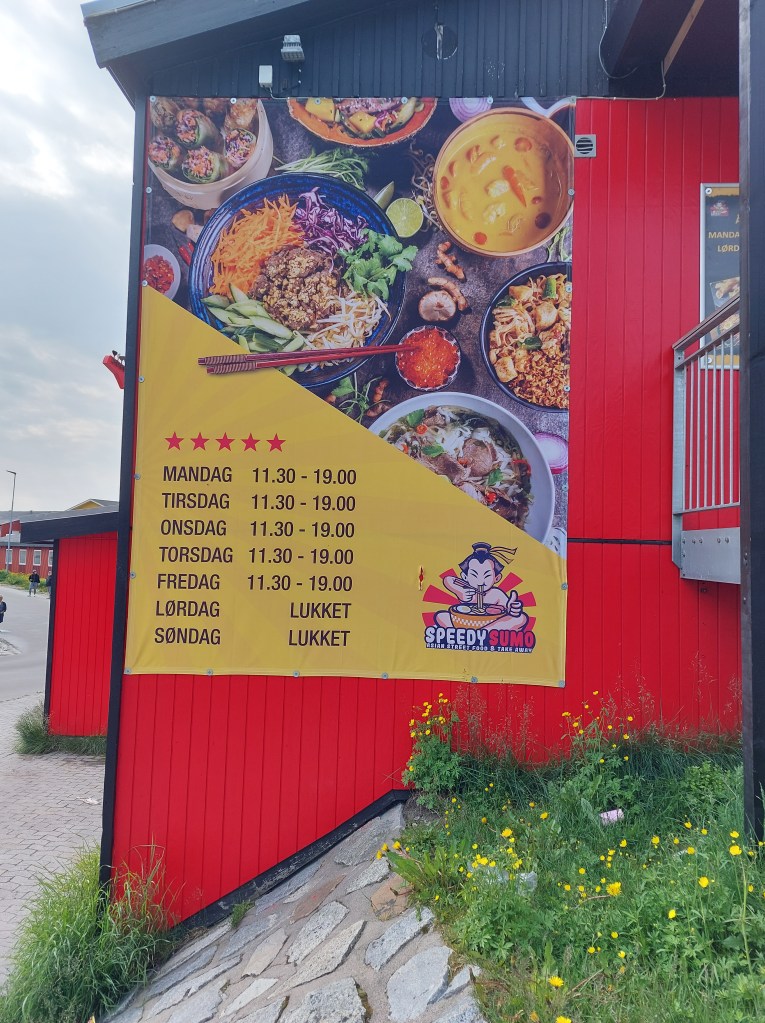
Perhaps that shouldn’t be too much of a surprise. Finding that there was a Thai restaurant certainly was though. Not quite sure why it wouldn’t be open at the weekends as in many parts of the world that would be its busiest days of course.
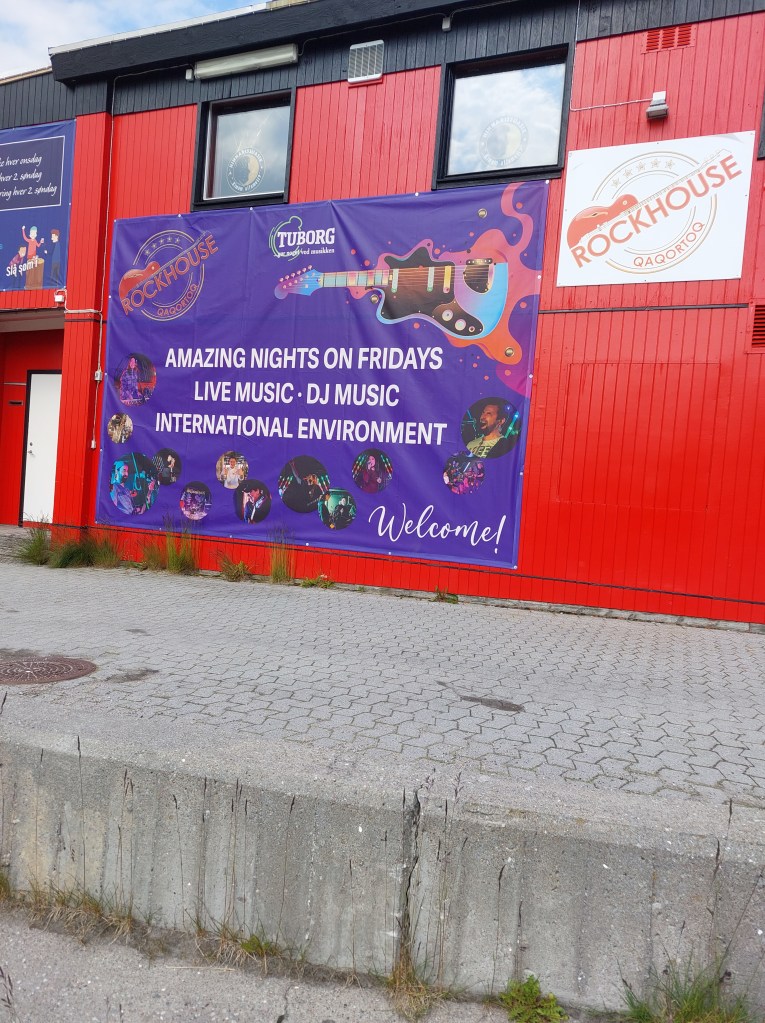
That discovery was then beaten when we found that Qaqortoq also has a nightclub. Unfortunately only open on Friday’s but until four in the morning.
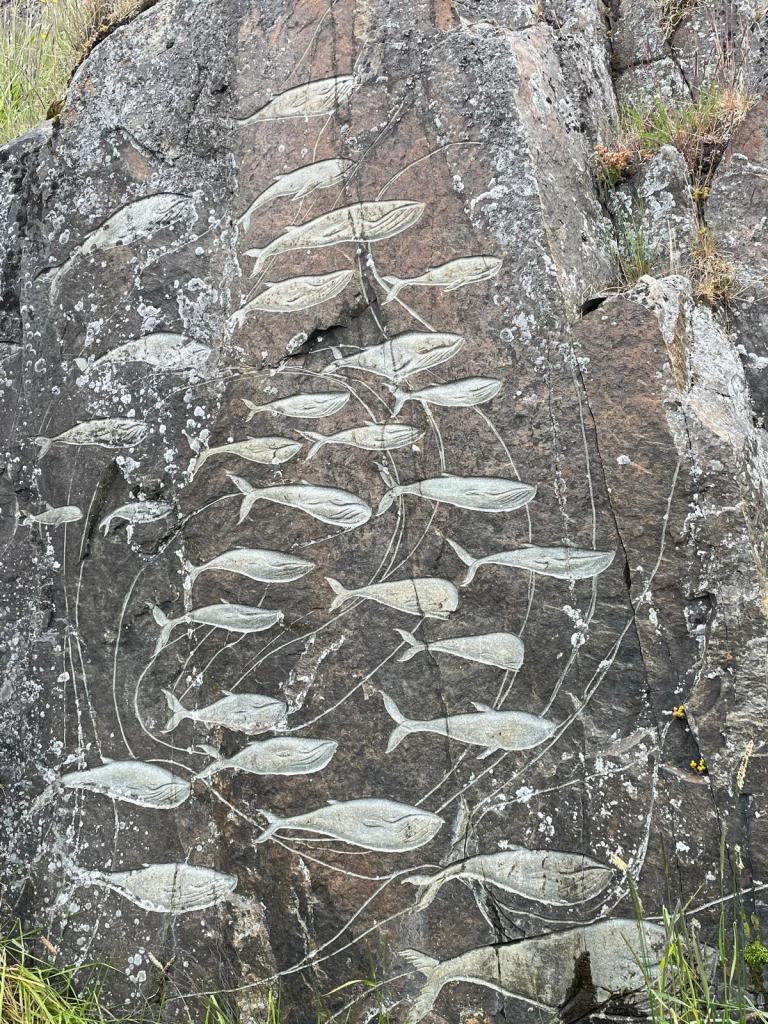
Back on what would be classed as the tourist trail in a place where there were lots of tourists there are some excellent stone carvings to see.
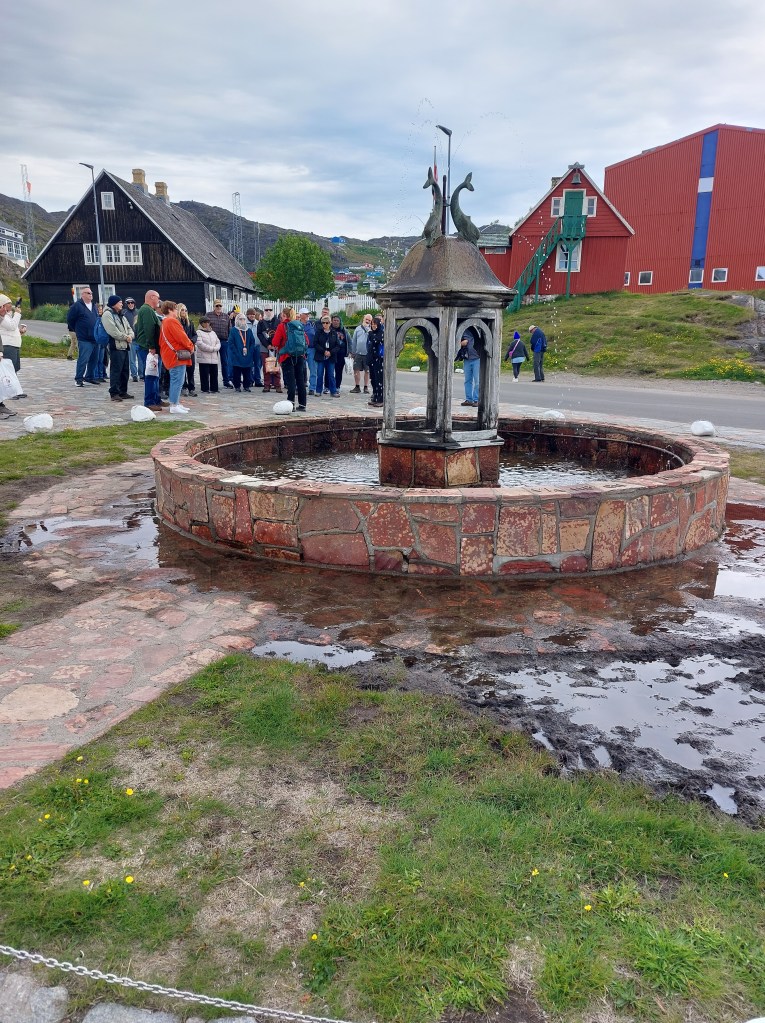
And Qaqortoq has won the bragging rights for Greenlandic waterfalls as the one below is apparently the only example on the vast island.
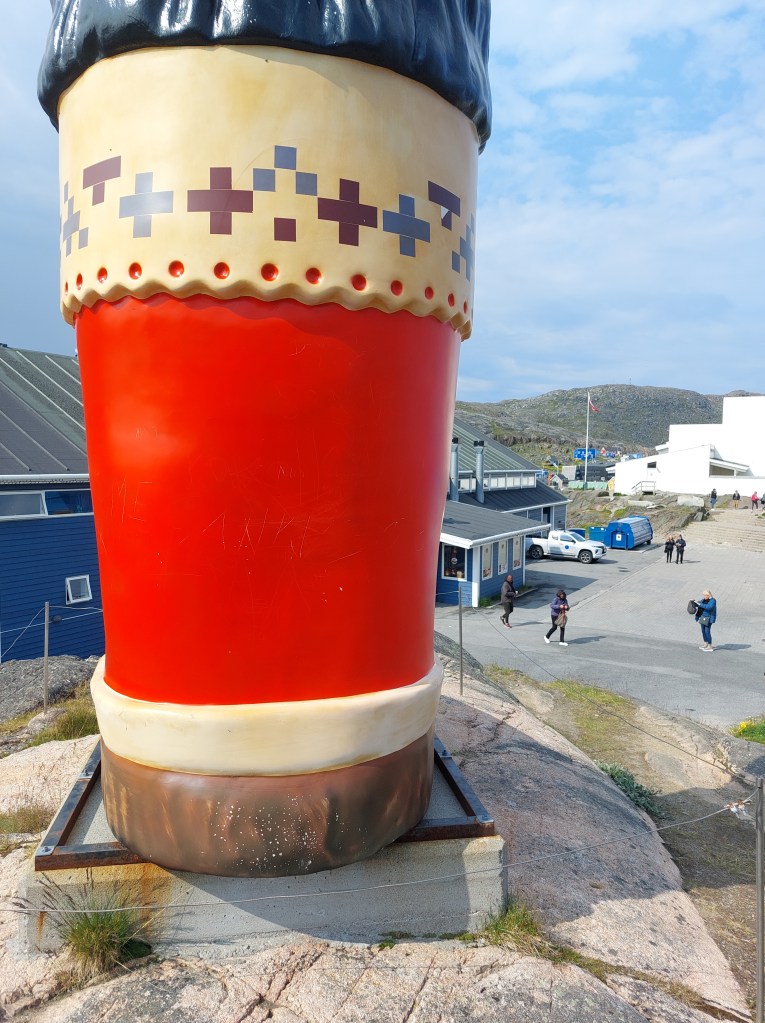
There is also a huge red Inuit boot on top of a rocky outcrop. Interesting in itself but possibly appearing somewhat random with no signage or explanation as to why it might be there.
By now all the walking had raised a thirst. Unfortunately it appeared it was standing room only in the Kunguak Cafe before a stroke of good fortune saw two people leave prime seats just as we arrived. Greenland does have its own brewery known as Godthaab Bryghus and we sampled a pint of Nittaalaq Pale Ale. This went down well and our Greenlandic was considerably improved when we found out that Nittaalaq means single perfect snowflake.
Before we returned to the boat there was a good reminder that day to day working life in Qaqortoq is still largely dominated by the fishing industry. Huge chunks of freshly cut whale meat on sale by the harbour on the equivalent of a market hall table. Not a particularly appetising sight unless maybe it’s something you have been bought up on. Back on the boat at dinner the Waldorf Salad provided a welcome alternative, as well as a beaming smile for anyone old enough to remember Fawlty Towers.


 Big Dave
Leave a comment