
Today is the second home game of the season at Anfield. Since the previous match though the captain of the team that started putting the club on the football map back in the 1960s has passed away. This puts events that are to take place on the pitch firmly in perspective.
Ron Yeats came from an era when footballers had a day job and often travelled around generally and to games they were actually playing in on public transport with the supporters. Ron worked in a slaughterhouse and originally played for Dundee United. Although there are many legendary stories involving him and the equally iconic Liverpool manager Bill Shankly it is the one when he first signed for Liverpool that remains my favourite. Mr Shankly suggesting to that Ron he was seven foot tall being met with the response that he was only six foot by Ron. ‘That’s near enough seven foot for me’ was the instant retort.
Beyond that numerous honours followed. First promotion from what was then known as the second division, more recently the championship. A first FA Cup and first European final along with two league titles. Roy Evans has suggested the Liverpool side of the 1960s was the best one of all and there’s probably no one better placed to know. Crucially for my generation that started supporting in the 1970s they laid the superb foundations for what followed. I feel very grateful to Ron for his massive part in that and also immensely sad that Alzheimer’s disease caused his death. A disease that we now know has the heading of the old style leather footballs as one of its causes.
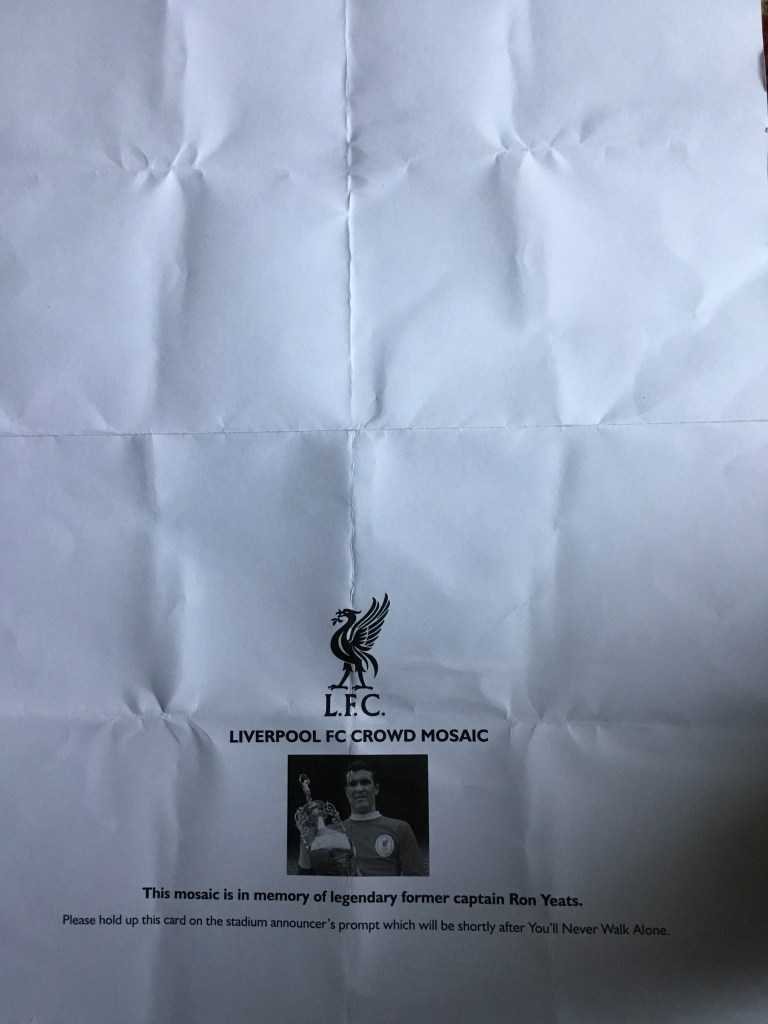
In the ground as kick off approaches those of us on the Kop all have pieces of card under our seats to make a giant mosaic in tribute to Ron. These are held up in unison at the end of the traditional singing of ‘You’ll Never Walk Alone’ while the rest of the ground joins in a minutes applause for him. Of course the vast majority of the ground will never have seen him play but we owe him a huge debt. Even in retirement, he returned to the club in a scouting capacity and sourced both John Aldridge and Sami Hyypia. RIP Rowdy.


 Big Dave
Leave a comment